

About: The City Water Resilience Approach (CWRA) was developed to help cities grow their capacity to provide high-quality water resources for all residents, protect them from water-related hazards, and connect them through water-based transportation networks.
CWRA was funded by The Resilience Shift and the Rockefeller Foundation and developed by Arup and the Stockholm International Water Institute (SIWI).
The World Resources Institute adapted the CWRA to support urban water resilience initiatives across several African cities. The Approach is also featured on the UN Sustainable Development Goals website.
Design and impact: Created the visual identity and end-to-end design system for a global water assessment tool, helping city and national governments assess urban water resilience and make informed decisions. Deliverables included the assessment framework, reports, workshop materials, data visualisations, and UI/UX design for the digital application. Designed for multidisciplinary stakeholders across cities worldwide, the materials made complex information clear, actionable, and accessible to diverse audiences, including non-English speakers.
CWRA's five steps to city water resilience:

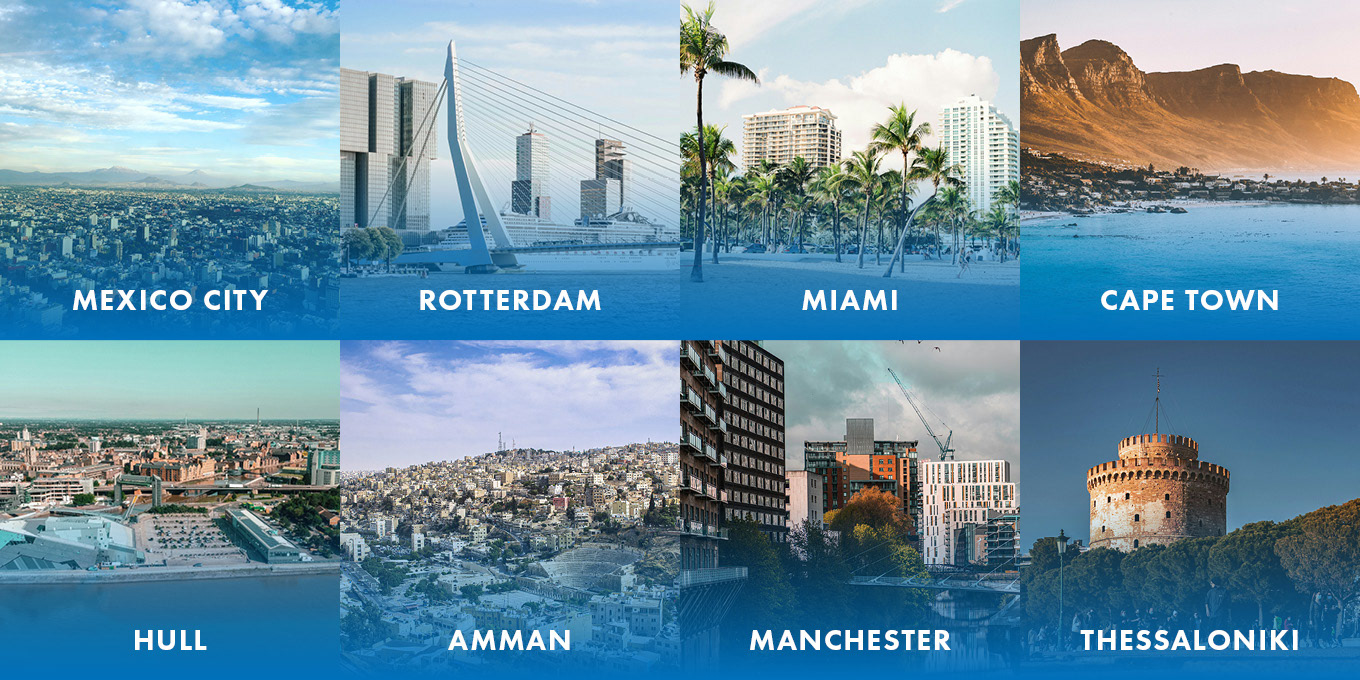
In the first stages of the project, we worked with Mexico City, Rotterdam, Miami, Hull, Cape Town, Amman and Thessaloniki. More cities joined later including Lagos, Addis Ababa, Johannesburg, Musanze, Kigali and more.
As a part of step 1 (understand the system), we've worked with cities on their Characterization reports and developed an app to help visualize complex water system networks.

OurWater app landing page - the app helps cities understand their water system, stakeholders, projects, responsibilities and more.
As a part of step 2 - assess resilience, our team developed a framework to help determine the city's strengths and weaknesses. My task was to visualize it.
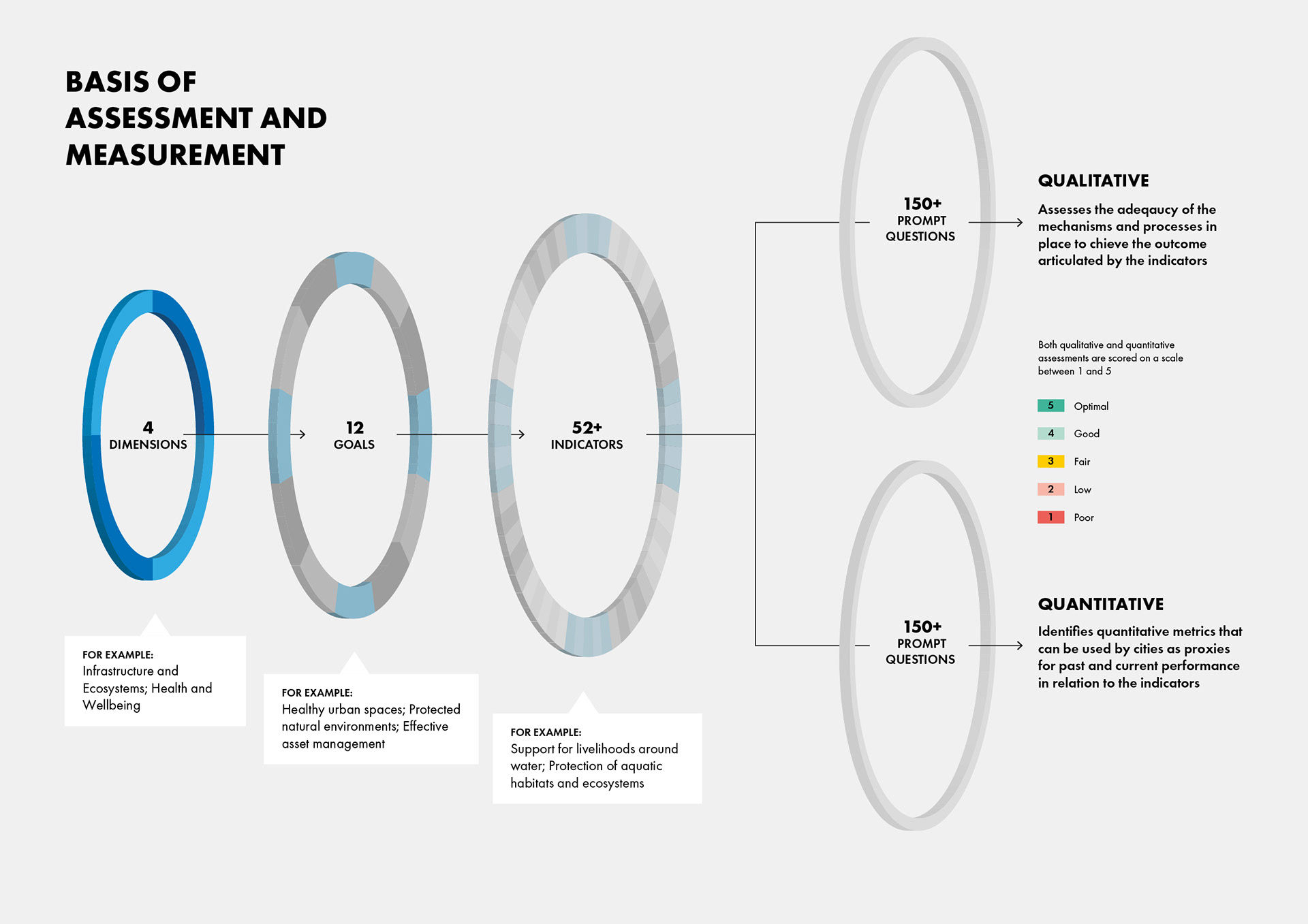
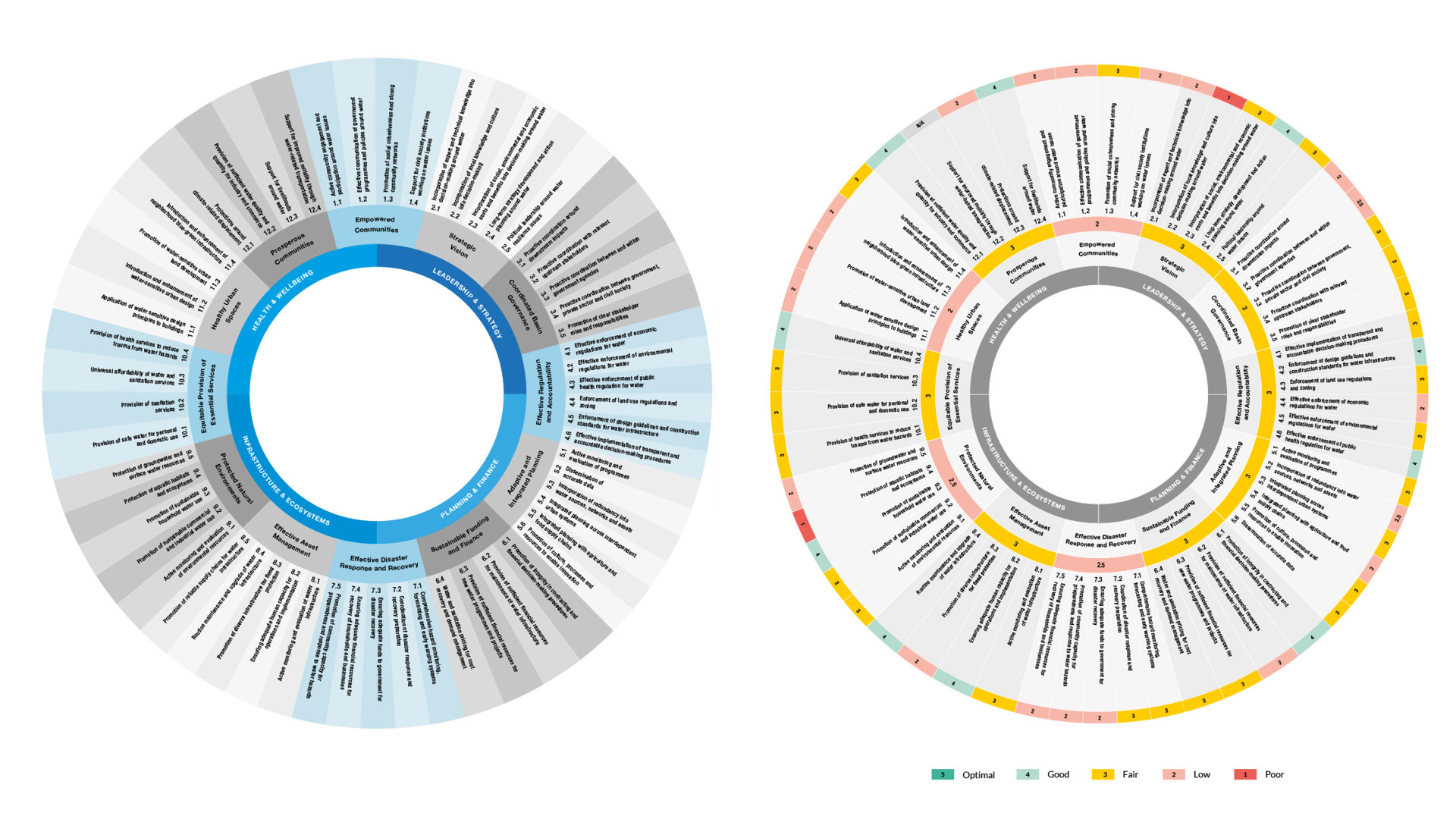
Left - visualization of the index consisting of 4 dimensions, 12 goals and 52+ sub-goals. Right - visualization of the completed qualitative assessment using the scoring system. Both below versions were used to guide participants during workshops.
Groups of city experts from Miami (left) and Cape Town (right) during an assessment workshop. The workshop materials were designed to translate complex topics and years of research into easily understood visuals, to help participants identify challenges and opportunities in their city water systems.


After the workshop in each city, the results were collected and compiled into a report - Water Resilience Profile, a deep dive into the city's assessment, challenges and opportunities.